














There’s a version of the celebrity interview that most people are used to.
The polished answers. The rehearsed vulnerability. The carefully managed narrative that reveals just enough to seem authentic without actually risking anything. The publicist-approved sound bites that make for great clips and say almost nothing real.
Most people have become so accustomed to that version that they’ve forgotten what a genuine conversation actually sounds like. What it feels like when someone with a well-known name drops the performance entirely and just tells you the truth.
That’s what I built the Imperfectly Perfect Podcast around. Not interviews. Conversations. The kind that go somewhere neither person planned when the recording started.
What happens when you stop treating guests as their public persona
I’ve sat across from Wim Hof, Dr. Joe Dispenza, Les Brown, David Meltzer, Rachel Hunter, Ricky Whittle, and dozens of others whose names carry weight in their respective worlds. What I’ve found consistently is that the most powerful moments in every conversation happen the second the guest realises this isn’t that kind of interview.
Nobody is here for the highlight reel version of their story.
The questions I ask aren’t designed to make anyone look good. They’re designed to find the truth underneath the version people have been telling for years. The losses that shaped them more than the wins. The moments of doubt they don’t usually admit to. The human reality that exists behind the professional brand, and that connects with people far more deeply than any achievement ever could.
When Claude Silver, Chief Heart Officer at VaynerMedia, described the experience, she said I was by far one of the most engaging hosts she’d encountered, always in tune with both the guest and the listener, guiding everyone into a genuine synergy of understanding and clarity. That’s not something you can fake. It comes from actually caring about what the person across from you is carrying.
Why authenticity at this level is a strategic asset, not just a value
There’s a reason the podcast has gained significant attention across national and international media and attracted guests who don’t say yes to every show that comes knocking.
It’s not the production. It’s not the follower count. It’s the reputation of the conversation itself.
When high-calibre people know that a platform is built around genuine exchange rather than promotional opportunity, they show up differently. They trust it. And when they trust it, what comes out of the conversation is worth actually listening to.
Every episode spanning corporate leadership, entertainment, sport, health, and wellbeing carries that same thread. Not because the topics are scripted to overlap, but because the underlying question is always the same, what does this person actually know, and what did it cost them to learn it?
What most podcasts miss entirely
The podcast space is saturated. There are more shows than anyone could ever listen to, most of them following the same format, asking the same questions, producing the same content that sounds vaguely interesting and leaves no lasting impression.
The ones that cut through do something different. They make the listener feel like they’re sitting in a room where something real is being said, where the guest is revealing something they don’t reveal everywhere, and where the host is present enough to find it.
That requires a specific kind of skill. Not just good questions, the ability to read what’s beneath the surface of an answer and follow it somewhere honest. The willingness to let silence sit until the real thing emerges. The trust built in the room before the recording even starts.
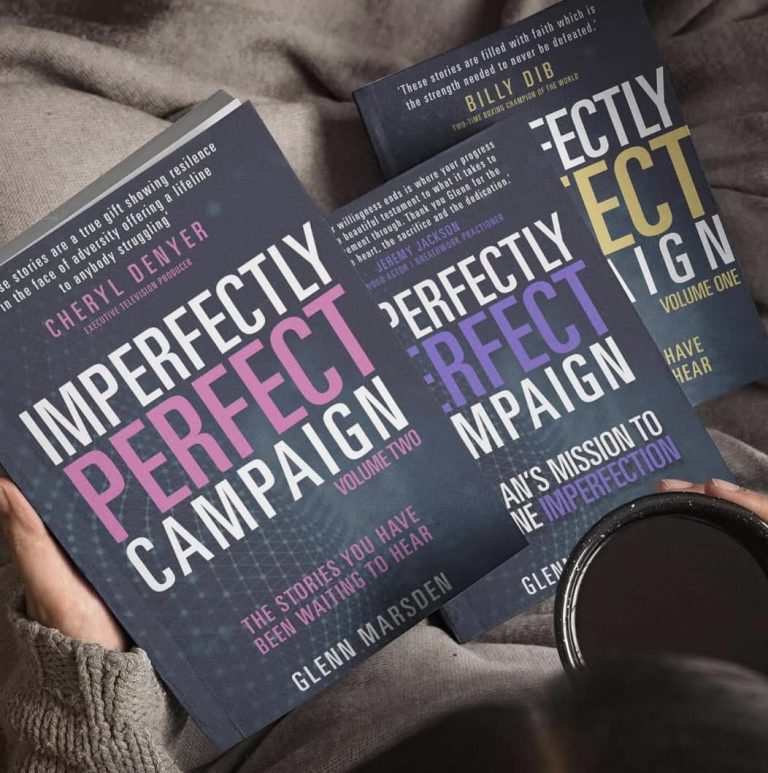
I’ve spent years developing that ability, through the Imperfectly Perfect Campaign, through thousands of conversations with people navigating everything from extreme public success to profound personal struggle, through a genuine obsession with what makes people tick beneath the version they show the world.
Why these conversations matter beyond entertainment
The Imperfectly Perfect Campaign was built on one foundational belief, that when people share their real stories, without shame or performance, something shifts. Not just for the person listening. For the culture around it.
The podcast is an extension of that. Every conversation is an act of advocacy. Every guest who speaks honestly about mental health, resilience, failure, identity, or reinvention gives permission to the person listening to do the same in their own life.
That’s not a content strategy. That’s a mission.
And the reason this show continues to attract the calibre of guests it does, and the attention it generates internationally, is because that mission is felt in every single episode.
You can’t manufacture that. You can only build it by caring more about the truth of the conversation than the optics of it.
That’s what this show has always been. And it’s what it will keep being.